Across Delhi's Rivers & Drains
Aaxis Nano to Deploy
DPCC's Next-Generation
Water Quality Monitoring Network
41 field installations equipped with advanced sensors and instrumentation will be deployed across rivers and drains, strengthening continuous water quality surveillance, environmental intelligence, and data-driven decision-making across the capital.
Aaxis Nano has been entrusted with one of Delhi’s most significant environmental infrastructure initiatives to date the deployment of a 41-station monitoring network spanning the capital’s rivers and major drains, marking a major step forward in modern water quality governance for the city.
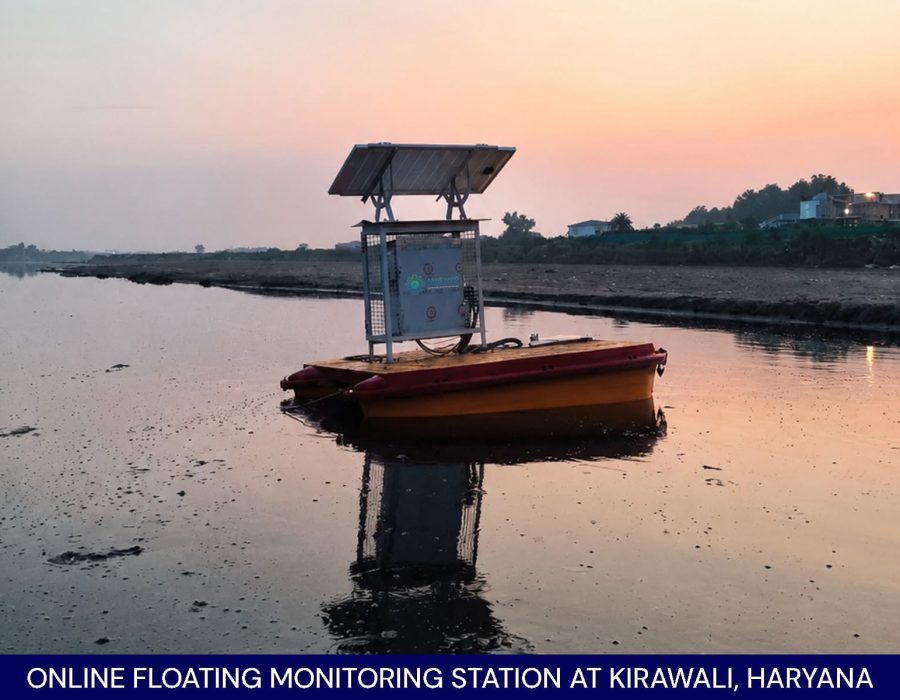
With pollution levels in urban rivers and drains varying significantly throughout the day, periodic sampling often fails to capture the complete picture. To address this challenge, a network of Online Monitoring Stations (OLMS) is being deployed across 41 strategic locations; 6 river monitoring sites and 35 major drains across Delhi. This makes it one of the most extensive river and drain monitoring networks deployed in any Indian city to date, covering key stretches of the River Yamuna and the major drains that feed into it.
Each station is equipped with advanced sensors and instrumentation to continuously measure critical environmental parameters. The 6 river stations and 35 drain stations monitor Flow, pH, BOD, COD, TSS, Total Nitrogen, Total Phosphorus, Total Organic Carbon (TOC), Ammonium, Dissolved Oxygen, Temperature, and Conductivity, providing a comprehensive picture of pollution load across Delhi’s water bodies.
Each OLMS unit is solar-powered, housed in a dedicated cabin, and supported by IoT-enabled communication and centralized analytics, ensuring uninterrupted operation and instant data accessibility even at remote locations. Designed in accordance with CPCB guidelines and backed by 5 years of operations and maintenance, the network will provide actionable environmental intelligence, remote accessibility, and enhanced visibility into pollution trends across Delhi.
By transforming fragmented monitoring data into actionable monitoring insights, the network is expected to enhance pollution load assessment, improve spatial and temporal understanding of waterbody dynamics, and support evidence-based regulatory and operational decision-making at scale.

